
R22 for Feedstock Market: What HVAC Buyers Should Know
A practical HVAC buyer guide to separating R22 feedstock-market language from normal service purchasing, compliance checks, and equipment decisions.
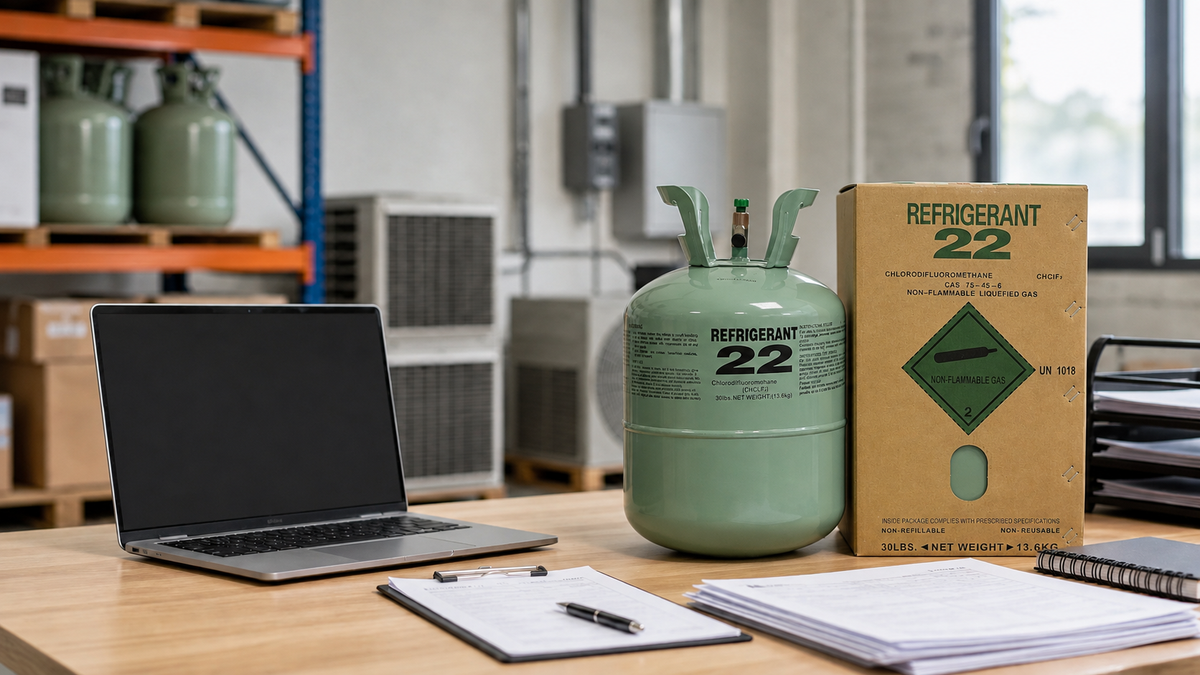
If you searched for R22 for feedstock market, pause before treating that phrase as an ordinary HVAC purchasing path. In ozone-depleting-substance regulation, feedstock and transformation language usually belongs to industrial chemical manufacturing, not to a contractor buying R22 for service on existing air-conditioning equipment. For most HVAC buyers, the useful decision is whether the job is a documented service purchase, a retrofit discussion, or a compliance question that should not be solved by shopping for a cylinder.
For a real service need on existing R22 equipment, start with the equipment label, the technician's diagnosis, and the current 30 lb R22 refrigerant product page. For feedstock wording, use the checks below to avoid confusing industrial regulatory terms with field service purchasing.
What feedstock means in refrigerant regulation
EPA materials distinguish ordinary refrigerant use from situations where an ozone-depleting substance is used as a feedstock and transformed into another chemical. That distinction matters because feedstock or transformation activity is not the same as charging, servicing, topping off, or storing refrigerant for HVAC equipment. The buyer-facing point is simple: a search result about feedstock does not create a shortcut around refrigerant sales rules or service requirements.
EPA's importing ozone-depleting substances guidance separates controlled-substance activity by purpose, including transformation or destruction contexts. The current regulatory definitions are also available in 40 CFR 82.3. Those sources are relevant because HCFC-22, commonly called R22, is an ozone-depleting HCFC subject to phaseout and reporting rules.
Why the phrase matters to an HVAC buyer
Most FreonMarketShop readers are not chemical manufacturers. They are technicians, facility teams, property managers, or purchasing staff trying to support an installed system. For that audience, feedstock language is mainly a warning sign that the page or result may not match the intended transaction.
A feedstock-related reference may be about industrial inputs, import reporting, transformation, or broader HCFC market analysis. It does not tell you whether your building's equipment should receive R22, whether a leak has been repaired, whether a retrofit is appropriate, or whether your buyer documentation is complete. Those decisions require equipment-specific service information.
How to separate service purchasing from feedstock language
Before ordering R22, classify the job in plain language. A clean purchase file should answer these questions:
- Equipment use: Is the refrigerant intended for an existing stationary air-conditioning or refrigeration system?
- Service plan: Has a qualified technician diagnosed the system and confirmed R22 is the required material?
- Regulatory context: Are you buying for service, resale, reclamation, destruction, or industrial transformation?
- Documentation: Can you keep the invoice, product page, service notes, and required purchaser evidence together?
- Alternative path: Has the technician considered repair, retrofit, or replacement if the system has repeated leaks or declining performance?
If the answer points to normal field service, evaluate the purchase as an R22 service order. If the answer points to industrial transformation or import activity, that is outside a normal HVAC buyer checklist and should be handled through appropriate regulatory and legal review.
What EPA phaseout history does and does not change
EPA explains that production and import of HCFC-22 for most uses ended as part of the U.S. HCFC phaseout, while existing equipment may still be serviced under applicable rules using allowed supplies. That history is why R22 purchasing often involves more documentation and caution than newer common refrigerants.
The phaseout does not mean every older system should automatically be replaced today. It also does not mean a buyer can ignore leak repair, technician qualification, seller verification, or cylinder records. Use the published R22 replacement options decision framework when the question has moved from a one-time service purchase to longer-term equipment planning.
Buying checks for a legitimate R22 service order
Once a technician confirms that the job is an R22 service purchase, the buying task becomes more concrete. Confirm the cylinder size, product page, seller process, delivery details, receiving inspection, and storage plan. Do not let industrial terms such as feedstock distract from ordinary purchase controls.
The EPA refrigerant sales restriction is the key source to review before checkout. Buyers should confirm eligibility and work with certified HVAC professionals when required. If you need a plain-English buying explanation, the published guide Can You Buy R22 Refrigerant Without a License? covers the purchasing side without turning it into a service procedure.
When R22 should not be the next order
A search for R22 can be a symptom of a larger system decision. If the equipment has repeated leaks, poor performance, unclear service history, or missing labels, ordering another cylinder may be the wrong first move. Ask the service provider whether the work is a repair, a documented recharge after leak correction, a retrofit evaluation, or a replacement recommendation.
Do not treat R410A, R407C, R32, or another product as a direct substitute because a search result mentions replacement. For example, R410A is not a direct R22-system swap, and retrofit options require equipment documentation and professional review. Use the broader refrigerants collection only after the equipment path is clear.
FAQ
Does R22 for feedstock mean I can buy R22 for any use?
No. Feedstock language usually refers to industrial chemical transformation or related regulatory contexts. HVAC service purchasing still needs the appropriate buyer eligibility, seller process, and technician involvement when required.
Is feedstock R22 different from HVAC service R22?
The phrase describes the intended use context, not a buyer shortcut. For an HVAC system, the important checks are the equipment label, service diagnosis, cylinder product details, and compliance documentation.
Can existing R22 equipment still be serviced?
Existing equipment may be serviceable under applicable rules, but the service plan should come from a qualified professional. The phaseout history affects supply and documentation; it does not replace system-specific diagnosis.
Should I buy R22 before deciding whether to repair or replace the system?
No. If the service path is unclear, decide first whether the system needs leak repair, continued R22 service, retrofit evaluation, or replacement. Ordering refrigerant before that decision can create unusable inventory.
Where should I check current R22 product details?
Use the live product page for current store-level details and the published price guide for cost factors. Do not rely on a regulatory feedstock result to answer product availability, cylinder size, or delivery questions.
