
Heat Pump Blowing Cold Air During Defrost? What to Watch
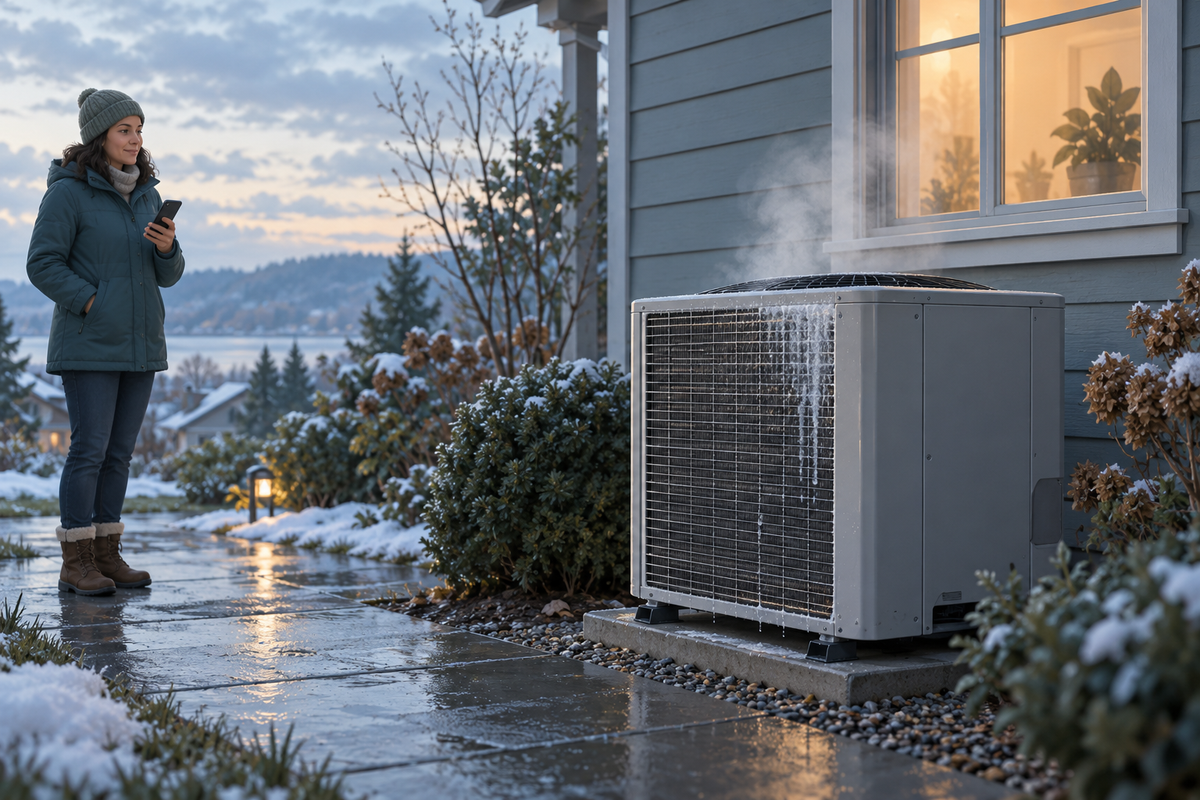
Your heat pump is heating the house, then the air from the vents suddenly feels cooler. Outside, you may see a white plume or notice that the unit sounds different. A short interruption followed by normal heating can be part of defrost. Cold air that continues, growing ice, or a falling room temperature needs a different response.
Start by checking the thermostat and watching what happens before, during, and after the event. This applies to a ducted air-source heat pump in heating mode. A cooling-only air conditioner, a ground-source system, and a multi-zone room-control conflict need different checks.
Why heating briefly changes during defrost
In winter, the outdoor coil absorbs heat from outside air. Its surface can be cold enough for moisture to freeze even when the weather report shows a temperature above freezing. Defrost briefly reverses operation to warm that coil, then the system returns to heating the home. Lennox's defrost explanation describes this sequence and the water vapor that can rise as frost melts.
The useful clue is the whole sequence, not the plume alone: frost reduces, the interruption ends, and heating resumes. Observe from a safe distance with the cabinet closed. Do not reach into the fan opening or try to make the system enter defrost.
Write down the start and end times if you can. Check your own operating manual for expected behavior; a general online duration is not a pass/fail limit for every model, control system, and weather condition.
Cool air stops when the heating cycle resumes
What to look for: The change is temporary, outdoor frost visibly reduces, and the house continues maintaining its temperature afterward.
What it means: That pattern is consistent with a completed defrost cycle. Some installations provide supplemental heat during the interruption, so the change at the indoor vents may be small. Others make the pause more noticeable. Carrier explains that supplemental heat can support comfort during defrost; the backup source and its control depend on the installation.
Next action: Leave the normal settings steady and note whether this pattern repeats without a loss of comfort. Do not select Emergency Heat just to stop an otherwise normal defrost event. If the interruption has become much more uncomfortable than it used to be, ask the service company to check the expected backup-heat sequence for your installed equipment.
The blower keeps circulating air between heating calls
What to look for: Air continues coming from the vents after the room reaches its set temperature. There may be no corresponding frost-clearing event outdoors.
What it means: With the fan set to ON, the blower can circulate room air when the system is not actively heating. That air may feel cool against your skin. Carrier's heat-pump troubleshooting guide distinguishes this from a brief defrost interruption and from persistent cold air during a heating demand.
Next action: Confirm the operating mode is HEAT. If continuous circulation was not intentional, select AUTO for the fan using the normal thermostat controls. Record whether the unwanted airflow stops between calls. Fan AUTO is a fan setting; it does not mean automatic heating/cooling changeover. If the room keeps losing temperature while heat is requested, a fan-setting explanation is not enough.
Ice stays on the outdoor unit or quickly builds again
What to look for: A thick coating remains instead of clearing, the base is surrounded by accumulating ice, or the fan appears obstructed. Do not treat these as harmless merely because some winter frost is normal.
What it means: Lennox's frozen-heat-pump guidance distinguishes light frost from obstructive ice and identifies drainage, weather, airflow, and component problems as possible contributors. Ice is an observation, not proof that refrigerant is low.
Next action: If ice is obstructing the unit or it is struggling mechanically, stop heat-pump operation with the normal thermostat control and contact the service company. Do not chip the ice, pour hot water onto the equipment, or use a heater to force it off. Ask how to maintain household heat safely using the backup arrangement actually installed. An unfamiliar Emergency Heat option is not a substitute for knowing that arrangement.
Photograph the ice pattern before it changes. Note whether water appears to collect at the base or drip onto the unit from above. Those observations can help the technician distinguish where the ice forms from what causes it.
The unit clears, but the house still does not recover
What to look for: The event ends, yet room temperature continues dropping, airflow stays unusually weak, or the system repeatedly returns to long interruptions.
What it means: A defrost explanation does not settle a continuing heating complaint. Trane's heat-pump troubleshooting guidance identifies controls and sensors among possible causes when ice persists, and calls for professional assessment when basic checks do not restore heating.
Next action: Check only the accessible filter and visible obstructions allowed by your operating manual. Arrange service if the problem remains. Report the thermostat settings, outside conditions, event duration, ice pattern, and indoor-temperature trend. Avoid repeated resets that erase the pattern you are trying to describe.
A useful service message is: “Heat is requested, the outdoor frost clears, but the room drops from its starting temperature and does not recover.” Add the indoor and outdoor model numbers. This gives the technician more to work with than “it needs gas.”
If the diagnosis later calls for refrigerant work, use our equipment and refrigerant identification guide to organize the label and service records, then review what a documented refrigerant service plan should include. Neither a cold vent nor outdoor frost identifies the refrigerant, proves a shortage, or supplies a charge quantity.
A quick decision path
| What you observe | What to do next |
|---|---|
| Brief interruption, frost clears, heating and comfort return | Record the sequence and compare it with the model's normal behavior. |
| Air circulates between heat calls with fan ON | Check the fan setting; use AUTO if continuous circulation was unintended. |
| Defrost completes but the interruption is newly uncomfortable | Ask for an installed-system backup-heat and control check. |
| Heavy ice obstructs the unit or abnormal mechanical noise occurs | Stop operation, seek service, and discuss safe temporary heating. |
| Ice persists or the house fails to regain temperature | Provide the observation log for diagnosis; do not assume a refrigerant shortage. |