
Home AC Is Running but Not Cooling? Check These Clues First
A symptom-first guide to the common reasons a central air conditioner can run without cooling, with safe homeowner observations and clear service boundaries.
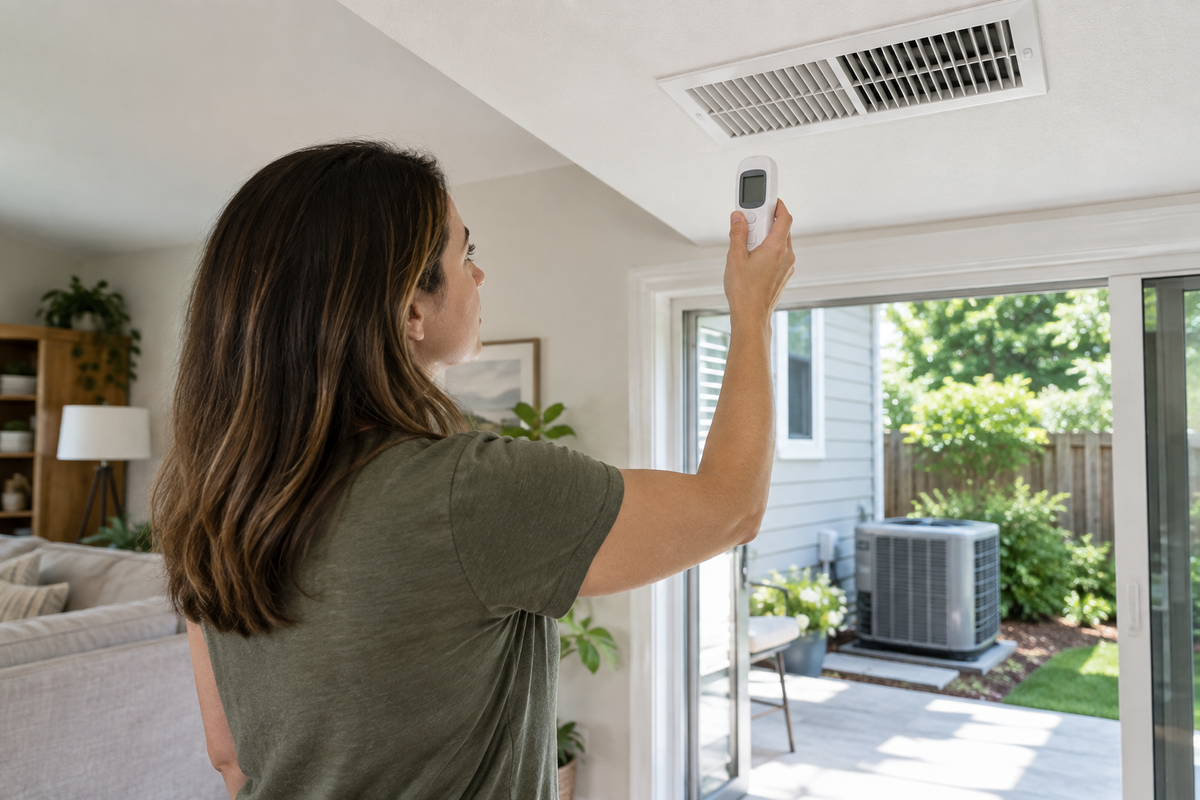
Your thermostat says Cool and the system runs, but the house keeps getting warmer. That does not automatically mean the air conditioner is low on refrigerant.
Check the thermostat, air filter, airflow at several vents, and outdoor unit. If you see ice on the refrigerant line or indoor coil cabinet, stop cooling and arrange service.
Why one symptom can have several causes
A central air conditioner must move indoor air across the evaporator coil, carry absorbed heat outdoors through the refrigerant circuit, and release that heat through the condenser. Controls coordinate those parts.
Restricted airflow, a failed outdoor unit, or a refrigerant-circuit problem can all produce the same complaint. The symptom should begin the investigation, not finish the diagnosis.
Cause 1: The indoor airflow is restricted
What you may notice: Air is coming from the vents, but it feels weaker than usual. Some rooms may receive less air than others. The system may run for long periods, and ice may eventually appear near the indoor coil or on the larger insulated copper line.
Why it affects cooling: The indoor blower must move warm household air across the evaporator coil. A loaded filter, blocked return, closed supply registers, dirty blower components, or a dirty evaporator coil can reduce that airflow. ENERGY STAR notes that dirty filters can damage equipment and that dirty coils and airflow problems reduce cooling performance.
What to do next:
- Check whether the thermostat is set to Cool and the fan setting is Auto rather than continuously On.
- Inspect the accessible return-air filter. Replace it if it is visibly loaded and the replacement type matches the system requirements.
- Make sure return grilles and supply registers are not blocked by furniture, boxes, or rugs.
- Compare airflow at several vents. A widespread reduction points to a system-level airflow problem; one weak room may point to a duct or balancing issue.
If airflow remains weak, schedule service. An indoor-coil, blower, or duct problem is not solved by buying refrigerant.
Cause 2: The outdoor unit is not moving or releasing heat
What you may notice: The indoor blower runs, but the outdoor unit is silent. You may hear humming without the outdoor fan turning, or the unit may start and stop unexpectedly. In other cases, the outdoor fan runs but the coil is heavily obstructed by debris.
Why it affects cooling: The indoor unit can keep circulating room air even when the outdoor condenser or compressor is not operating correctly. Without the outdoor side of the system rejecting heat, the air at the vents will not cool as expected.
What to do next: Stand clear and observe whether the outdoor fan runs while the thermostat calls for cooling. Do not open panels, touch wiring, test a capacitor, or repeatedly reset a breaker that trips again.
Keep vegetation and loose debris from blocking the unit. Leave internal cleaning and electrical diagnosis to a qualified technician. A tripped breaker, stalled fan, or burning smell is a reason to turn the system off and call for service.
Cause 3: The thermostat or control sequence is wrong
What you may notice: The fan runs continuously, but cooling starts only occasionally or not at all. The thermostat display may be blank, show an unexpected mode, or report a room temperature that does not match the space.
Why it affects cooling: Setting the fan to On can circulate room-temperature air between cooling cycles, making it seem as if the AC is blowing warm air. A thermostat setting, depleted battery, control fault, float switch, or safety lockout can also prevent the compressor and outdoor unit from running even though the indoor fan operates.
What to do next: Confirm Cool, select a temperature below the current room temperature, and set the fan to Auto. Replace thermostat batteries if the model uses them. Then allow the system a few minutes to respond.
Do not bypass a condensate switch or other safety control. If only the indoor fan runs, tell the technician which components start and which remain off.
Cause 4: The evaporator coil is frozen
What you may notice: Cooling becomes weaker over time, airflow drops, frost appears on the insulated copper line, or water collects after the ice begins to melt. The indoor blower may continue running even though little cool air reaches the rooms.
Why it affects cooling: Ice becomes an insulating layer and blocks airflow through the coil. Restricted airflow can contribute to freezing, but a refrigerant-side problem can also be involved. The presence of ice alone does not identify which cause is responsible.
What to do next: Turn off cooling. Do not chip, scrape, or heat the ice, and do not keep restarting the system to see whether it clears. Check the accessible filter and blocked vents while the system is off, then arrange professional diagnosis if icing occurred.
Carrier advises shutting the system down and contacting a professional when the evaporator coil is frozen.
Cause 5: The refrigerant circuit has a leak or incorrect charge
What you may notice: The system runs for long periods, cooling declines, or ice returns after airflow problems are ruled out. Hissing or oily residue can be relevant clues, but no single clue confirms a leak.
Why it affects cooling: Refrigerant carries heat between the indoor and outdoor coils. A leak, an incorrect previous charge, or a service error can reduce system performance. Refrigerant is not fuel that a correctly sealed air conditioner normally consumes.
What to do next: Do not choose a refrigerant from the symptom. Read the outdoor-unit nameplate and record the model number and refrigerant designation for the service call. Ask the technician to document:
- whether airflow and the major operating components were checked first;
- whether a leak or another reason for the charge condition was found;
- what repair is required before refrigerant is added;
- the exact refrigerant and manufacturer charge information for the equipment.
If the label is unfamiliar, use AC Refrigerant Guide: Match the Refrigerant to Equipment to interpret the nameplate and service records before comparing products.
Opening the refrigerant circuit, attaching gauges, recovering refrigerant, repairing a leak, or charging the system belongs to trained service personnel. EPA requires Section 608 certification for work that could reasonably release refrigerant and prohibits intentional venting during service.
If a professional diagnosis confirms that an R410A system requires refrigerant service, see How to Charge R410A Refrigerant Safely: What Homeowners Should Know for the service boundaries and questions to ask. Do not assume R410A is correct until the equipment label confirms it.
Cause 6: The system is operating, but the heat load is greater than it can handle
What you may notice: The AC produces cool air but cannot reach the thermostat setting during the hottest part of the day.
Why it affects cooling: A working air conditioner can fall behind if it is undersized, conditioned air is escaping, or a duct problem limits delivery. This problem often follows outdoor temperature and time of day.
What to do next: Note the outdoor temperature, thermostat setting, run time, and whether supply air stays cool. Ask a contractor to inspect ducts and evaluate the cooling load. Refrigerant does not correct an undersized system or duct leak.
Use the symptom to choose the next step
| What you observe | Most useful next step |
|---|---|
| Wrong thermostat mode or fan set to On | Correct the setting and observe one normal cooling cycle. |
| Dirty accessible filter or blocked return | Restore airflow with the correct filter and clear the obstruction. |
| Indoor fan runs, outdoor unit does not | Stop guessing and schedule electrical/control diagnosis. |
| Ice on the line or coil cabinet | Turn cooling off and arrange service; do not continue running it. |
| Breaker trips again, burning smell, or abnormal buzzing | Turn the system off and request prompt professional service. |
| Technician confirms a leak or incorrect charge | Repair the underlying problem, then service the system with the refrigerant specified by the equipment manufacturer. |
| Cool air is present but the house falls behind only under heavy heat | Ask for airflow, duct, load, and sizing evaluation. |
What to have ready for the service call
Take a photo of the outdoor-unit nameplate and note when the problem began, whether airflow is weak, whether the outdoor fan runs, and whether you saw ice or water. These observations help without turning a symptom into a diagnosis.
If refrigerant becomes part of the repair plan, use the equipment label and documented diagnosis before buying. FreonMarketShop's home AC refrigerant buying checklist explains that later decision; it should not be the first step.
The practical rule is simple: start with what the system is doing, connect each clue to the causes it can support, and choose the next safe action. Refrigerant may be part of the repair, but "running without cooling" is not enough evidence to order it.